2025 in Music: My Must-Have Albums
 Temps de lecture/Reading time : 6 minutes
Parasomnia – Dream Theater
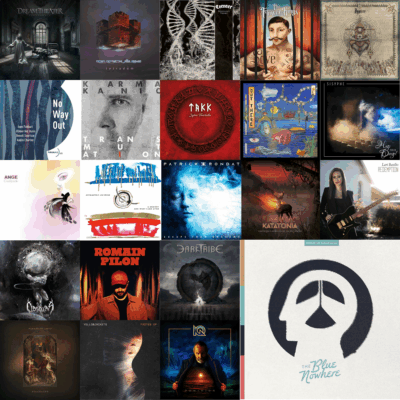
With Parasomnia, Dream Theater delivers one of their darkest albums since Black Clouds and Silver Linings. The band explores sleep disorders through labyrinthine compositions blending monolithic riffs, futuristic orchestrations, and a more organic production than usual. Portnoy, now fully settled behind the drums, offers a performance that is both virtuosic and narrative, while Petrucci multiplies textures, prioritizing atmosphere over showmanship. Keyboards and bass intertwine with surgical precision, creating a depth that turns every listening into an immersive experience. The careful mixing and mastering capture every detail in the complexity of the compositions, offering a pivotal album that is both introspective and monumental, with each track telling a musical nightmare more fascinating than the last.
No Way Out – Olivier Ker Ourio & Ivan Paduart
The harmonica-piano duo of Ker Ourio and Ivan Paduart reaches a rare maturity on No Way Out. The album breathes complicity: intimate, melodic jazz shaped in a stripped-down writing style where every silence matters. Themes are delicately sculpted, between nostalgia and luminous breathing, and each improvisation reveals exceptional chemistry between the two musicians. Ourio’s harmonica dialogues with Paduart’s piano in a subtle call-and-response, while soft textures create an enveloping atmosphere, like a musical whisper threading into the listener’s soul. An album that reminds us that the most impressive virtuosity is sometimes the one that steps aside for emotion.
Cunégonde – Ange
Ange returns with a theatrical and baroque concept album, uniquely their own. Cunégonde blends social satire, absurd poetry, and old-school progressive rock. Christian Décamps, retired from the stage, hands the baton to his son Tristan Décamps in a symbolic father-to-son gesture. The incisive wit, carried by lush orchestrations and a storytelling style worthy of a rock opera, retains all its power. The album embodies a dialogue between generations, with a flamboyant, irreverent, and deeply Ange-like spirit. Each track is a musical theater piece where keyboards, guitars, and voices converse, enhancing the dramatic intensity of the story and giving an epic sweep to the whole.
Dissonance Theory – Coroner
The Swiss trio hits hard with an album that reconnects with the cold, mathematical precision of their early work while incorporating industrial and contemporary sounds. Dissonance Theory is a sharp, dense album where technicality serves a nearly clinical existential statement. Every riff and break is executed with surgical precision, and the level of detail in the solos and counterpoints is impressive. This technical metal benefits from Jens Bogren’s mixing, which adds clarity and power to the compositions, allowing the listener to perceive all the subtleties of the arrangements and complex textures. A deservedly acclaimed comeback for one of the genre’s most influential bands.
Tetradōm – Quadvium
The supergroup merges modern jazz, world music, and futuristic improvisations. Tetradōm impresses with its sonic architecture: a moving musical cathedral where the four musicians respond as if sharing the same brain. The two lead bassists, Jeroen Paul Thesseling and Steve DiGiorgio, provide foundational textures, their instruments serving as rhythmic and melodic pillars. Complex melodies and counterpoints weave a constant dialogue between instruments, and each solo is a mini-narrative that transports the listener. The album offers both energy and contemplation. A thrilling “laboratory album” that invites repeated listens to grasp all its subtleties.
Love – The Flower Kings
The Swedish symphonic prog masters deliver a luminous album celebrating melody and human warmth. Love reconnects with the group’s grand polyphonic flights while offering a more modern and airy production. Roine Stolt and his companions infuse optimism and musical poetry, with richly orchestrated dynamics and atmospheres. Tempo variations, sumptuous choruses, and complex harmonies enrich the listening, giving the album an almost cinematic dimension. An optimistic and colorful ode that moves the soul and revives the grandeur of symphonic prog.
Transmutation – Karmakanic
Jonas Reingold, formerly of The Flower Kings, and his troupe present a rich and complex album exploring inner transformation and human paradoxes. Transmutation alternates intimate passages with orchestral explosions, displaying a precise sense of dramaturgy. Chris Lord-Alge’s mixing gives the album exceptional power and clarity, allowing every instrumental detail to shine—from keyboard subtleties to the most impactful percussive attacks. A profound conceptual album that confirms Karmakanic’s place among contemporary prog’s elite, appealing to both fans of musical complexity and those sensitive to atmosphere.
Nightmares as Extensions of the Waking State – Katatonia
Katatonia continues its atmospheric turn with refined darkness. Here, the nightmare is no longer a rupture but an extension of the waking state. Crystal-clear production, ethereal guitars, soft percussion, and increasingly delicate vocals create an album suspended between melancholy and contemplation. Each track develops a hypnotic sonic narrative, supported by keyboard layers and subtle vocal harmonies. Jens Bogren’s mixing amplifies the album’s clarity and depth, allowing listeners to perceive every nuance. One of their most elegant works, best enjoyed in an intimate setting to fully grasp its depth.
Takk – Sylvie Fisichella
The singer from Nice, who also runs a music school, presents an introspective album blending neo-classical and ambient elements. Takk moves through delicate, enveloping soundscapes, each song carrying the emotion of her unique interpretation. Her phrasing and harmonies create an intimate, captivating atmosphere, while subtle arrangements highlight her expressive voice. The album is an invitation to inner reflection, contemplation, and pure emotion.
Dominion – IQ
IQ returns with its unmistakable neo-prog style: long melodies, warm keyboard layers, and the storytelling typical of the band. Dominion follows in the footsteps of The Road of Bones, with more contrasts and carefully sustained dramatic tension. Themes intertwine, guitar solos punctuate the listening, while the rhythm section elegantly supports dynamic shifts. Immersive production and attention to textures give the album rare intensity. A new classic for fans, demonstrating the band’s coherence and maturity.
Open Roads – Romain Pilon
With Open Roads, the French guitarist continues his exploration of modern, refined, and deeply melodic jazz. The clear production highlights his harmonic sensitivity and delicate touch. The album evokes travel, open spaces, and a form of elegant freedom. Each piece unfolds a smooth musical narrative enriched with harmonic and rhythmic nuances, offering both intellectual and emotional listening. Subtle arrangements and a rich harmonic palette make this album particularly captivating.
A Memory and What Came After – Asymmetric Universe
The Italian band delivers a technical yet sensitive prog-metal album where virtuosity never overshadows emotional intent. A Memory and What Came After is a dense patchwork, alternating polyrhythmic grooves and atmospheric passages. The album features Richard Henshall (Haken) as a guest, adding his unique technical and melodic touch and enhancing the sonic complexity.
Fasten Up – Yellowjackets
The Yellowjackets return with a groovy and vibrant album. Fasten Up exudes collective energy in a modern, bright jazz fusion, driven by a flexible and inventive rhythm section. Solos are elegantly constructed, and improvisations breathe freedom while remaining perfectly coordinated. Careful attention to dynamics and mixing makes the album particularly lively and engaging. It proves that the band remains a pillar of the genre.
Ascension – Paradise Lost
The gothic doom pioneers solidify their status with a monumental yet introspective album. Ascension unfolds heavy riffs, dark orchestrations, and deeply committed vocals. Textures and sonic layers are meticulously crafted, alternating ethereal atmospheres and crushing passages. Careful production highlights contrasts and textures, enhancing the emotional impact. A mystical and relentless work.
Sisyphe – Sisyphe
The Niçois band Sisyphe delivers poetic, conceptual progressive jazz with long solos and controlled improvisations. Sisyphe navigates a rich sonic palette, highlighting each musician’s talents. Instrumental dialogues, tempo variations, and sophisticated harmonies create a unique musical exploration space. The album perfectly balances virtuosity, melody, and creative freedom.
Redemption – Lari Basilio
The Brazilian guitarist confirms her immense talent with an album blending fusion, instrumental rock, and gospel touches. Redemption shines through clear production and inspired compositions, with playing that is both technical and deeply expressive. Vinnie Colaiuta on drums and Leland Sklar on bass provide exceptional power and precision, making each track a true musical performance. Melodic themes are enriched by fascinating rhythmic and harmonic interactions, giving the album a rare depth.
Forgotten Reveries – Darktribe
The Niçois power metal band returns with Forgotten Reveries, a solid and melodic album combining power and emotion. Massive riffs and epic solos are supported by a rigorous rhythm section, creating a perfect balance between technique and melody. Memorable choruses and production that highlights the clarity of each instrument give the whole an epic dimension. The album tells a captivating sonic story, alternating fast passages and more atmospheric moments, revealing a new maturity for the band and confirming their place in the power metal scene.
Escape from Shadows – Patrick Rondat
The french guitarist returns with Escape from Shadows, an instrumental album blending virtuosity, melodic sense, and neo-classical influences. The album picks up where Patrick Rondat left off, offering a bright and precise journey through rich and varied compositions. Each solo is finely crafted, each musical phrase expressive, while the rhythm section elegantly supports the complexity of the tracks. Clear mixing and high production quality enhance the impact of his virtuosic playing, making this album a must-have for guitar enthusiasts.
The Blue Nowhere – Between the Buried and Me
Between the Buried and Me continue pushing the boundaries of progressive metal with The Blue Nowhere. The album is a musical labyrinth alternating brutal passages, instrumental explosions, jazzy interludes, and lyrical flights. Each composition is a complex architecture where riffs, keyboards, percussion, and vocals interact with incredible precision. Jens Bogren’s mixing amplifies depth and clarity, allowing listeners to discern every detail in this sonic maelstrom. The album spans a wide range of styles and emotions, showcasing the band’s inventiveness and audacity, offering a listening experience that is both demanding and thrilling.
A Sonication – Obscura
Obscura confirms its stature in tech-death with A Sonication, an album of exceptional precision and virtuosity. The compositions are complex yet perfectly structured, alternating sharp riffs, virtuosic bass lines, and spectacular solos. The production’s clarity allows each instrument and detail to shine, highlighting the band’s technical mastery. The album impresses with its density and coherence, offering an intense experience that combines power, speed, and harmonic sophistication, making every listen a fascinating journey.
Out There – Hiromi
Japanese pianist Hiromi delivers an album of boundless energy and creativity with Out There. The trio, occasionally a quartet, explores bold and virtuosic jazz, alternating contemplative passages and bursts of technical brilliance. Compositions are dense and rich in texture, where improvisation meets technical precision. Hiromi creates a cosmopolitan musical universe, with each piece telling a different story, full of surprises and dynamism. The album demonstrates her ability to push the boundaries of jazz piano and create music that is both intellectually and emotionally vibrant.
Amen – Igorrr
The French group explores a new sonic mutation: between degenerate baroque, breakcore, extreme metal, and absurd opera. Amen is organized chaos, fascinating and explosive, pushing the project’s sonic fantasy even further. The album confirms the singularity and boldness of Igorrr, leaving no listener indifferent.